Basement Waterproofing NJ and Foundation Protection: A Smart Investment
A dry basement rarely gets much appreciation until the first time water shows up where it should not. In New Jersey, that moment tends to come fast and inconveniently. A week of hard rain, a rapid snowmelt, a clogged footing drain, or a hairline crack that quietly widened over a few freeze and thaw cycles can turn a useful lower level into a damp, musty liability. What looks like a small nuisance often points to a larger issue, because moisture in a basement is never just about the basement. It affects air quality, stored belongings, framing, insulation, mechanical systems, and most importantly, the foundation itself.
Homeowners often think of waterproofing as a cosmetic upgrade or a reaction to a flood. In practice, it is closer to preventive maintenance for the structure of the house. When done properly, basement waterproofing and foundation protection work together. One manages water before it enters living or storage space. The other reduces the stress that excess moisture places on the concrete, masonry, and surrounding soil. Seen that way, Basement Waterproofing NJ is not a luxury service. It is a practical investment in preserving the building envelope and avoiding expensive structural repairs later.
Why New Jersey homes face a unique water challenge
New Jersey presents a complicated mix of conditions for basements. Older housing stock in towns with established neighborhoods often means stone or block foundations, aging mortar joints, and drainage systems that were designed for a different era. Newer homes may have poured concrete walls and better membranes, but they are not immune. High water tables in some areas, heavy clay content in others, and intense seasonal weather swings all raise the risk.
A house in Bergen County may struggle with runoff from neighboring lots and dense development. A property in Monmouth or Ocean County can deal with coastal moisture, storms, and saturated ground. Inland areas with clay-heavy soils often see water linger around the foundation after rain, creating hydrostatic pressure against basement walls. That pressure matters. It can push water through porous concrete, force seepage through cold joints, and exploit the smallest crack or gap around a pipe penetration.
The state’s freeze and thaw cycles add another layer. Water gets into tiny openings, temperatures drop, expansion occurs, and what was once a minor crack becomes more active. Over several winters, the basement that only smelled musty in July may begin showing visible damp spots in spring. That progression is common, and it is one reason experienced contractors take small warning signs seriously.
What homeowners often miss in the early stages
Basement water problems rarely begin with standing water. More often, they start quietly. You may notice cardboard boxes softening along the bottom, paint blistering near the slab, white chalky residue on the wall, or a dehumidifier that seems to run nonstop. Those clues matter because they point to recurring moisture, not just a one-time spill or humid day.
Efflorescence, that powdery white deposit left behind when water evaporates through masonry, is one of the clearest signs. It does not mean the wall is structurally unsound on its own, but it does confirm that moisture is moving through the material. The same goes for rust on metal shelving, a persistent earthy odor, or darkened areas at the base of the wall after storms.
One homeowner I spoke with years ago thought his basement issue was just summer humidity. He had lived with the smell for three seasons and kept a fan running near the stairs. When he finally pulled a finished wall panel away during a minor remodel, the back side was dotted with mold growth and the bottom plate showed early rot. The source was not dramatic flooding. It was recurring seepage through a wall crack hidden behind storage bins. The repair was manageable, but it would have been far less disruptive if addressed sooner.
Waterproofing is not one product, it is a strategy
There is a tendency in home improvement marketing to present waterproofing as a single fix. A coating gets advertised as a cure-all, or a sump pump is framed as the answer to every wet basement. In reality, good waterproofing is diagnostic first. The right solution depends on how water is moving, where it is entering, what the exterior grading looks like, how the soil behaves, and whether the issue is bulk water, vapor, or both.
A basement may need one targeted repair or a coordinated system. Interior drainage channels, sump pumps, exterior excavation, membrane application, crack injection, grading correction, gutter extensions, and dehumidification each solve different parts of the problem. Applying the wrong tool can waste money and create false confidence.
For example, waterproof paint has a narrow role. It can improve appearance and may slow minor dampness, but it does not relieve hydrostatic pressure. If water is being forced through the wall from the outside, surface coatings alone often fail. Likewise, a sump pump can manage water under the slab or at the footing, but it will not fix negative grading that funnels roof runoff straight toward the house.
The best Basement Waterproofing NJ projects start with a sober assessment of the water source, not a preset sales package.
The link between moisture and foundation damage
Water is patient, and foundations are not invincible. Excess moisture around a house changes the behavior of the soil supporting it. Saturated soils can expand, shift, or lose bearing capacity depending on composition. That movement can transfer stress to foundation walls and footings. Even if the basement never sees an inch of standing water, the structure can still suffer when the surrounding soil remains too wet for too long.
Concrete and masonry foundations often show stress in predictable ways. Horizontal cracks may signal pressure from saturated soil pushing inward. Stair-step cracking in block or brick can indicate differential movement. Bowed walls, sticking doors on lower levels, and sloping floors nearby can all tie back to moisture conditions outside the wall.
Not every crack is a crisis. Hairline shrinkage cracks in poured concrete are common. The issue is pattern, width, displacement, and whether water accompanies the crack. A seasoned eye can tell a lot from where the crack sits and how it changes over time. That judgment matters, because homeowners sometimes ignore dangerous signs while panicking over benign ones.
Protecting the foundation means reducing unnecessary moisture exposure. The less pressure on the wall, the lower the chance of seepage and long-term structural wear. That is why waterproofing and foundation protection are best treated as part of the same maintenance plan.
Exterior water management does more than people think
Many basement problems begin above grade. Roof water dumps at the foundation, downspouts discharge too close to the house, and flower beds or walkways trap runoff against the wall. In those cases, the basement is not the origin of the problem. It is simply where the consequences appear.
Some of the most effective improvements are not glamorous. Extending downspouts well away from the house, correcting reverse slope near the foundation, and keeping gutters clean can dramatically reduce the amount of water the foundation has to resist. These are not complete solutions for every home, but they are often the first layer of defense.
Here are the exterior conditions most worth checking:
- Gutters that overflow or leak at joints
- Downspouts that discharge within a few feet of the foundation
- Soil or hardscape sloping back toward the house
- Mulch beds piled too high against siding or masonry
- Window wells that collect runoff or debris
Those issues are common because they develop gradually. Soil settles, splash blocks shift, a landscaping project changes grade by an inch or two, and suddenly a house that was dry for years starts taking on water during storms. The basement did not fail overnight. The drainage pattern changed.
Interior systems have an important place
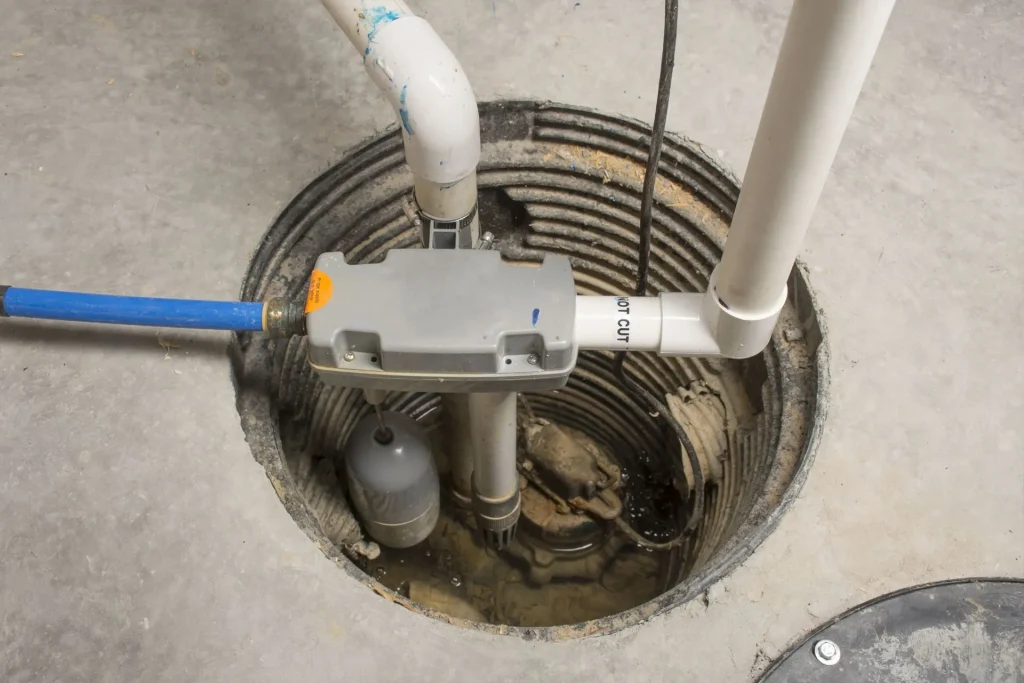
There are situations where interior waterproofing is the sensible answer. If exterior excavation would require removing patios, mature landscaping, or hardscape that is prohibitively expensive to disturb, an interior drainage system may offer strong protection with less disruption. These systems typically collect water at the perimeter where the wall meets the floor and direct it to a sump basin for discharge.
When installed well, interior systems can be very effective, especially in homes where water enters at the footing level or under the slab. They do not stop water from reaching the wall from the outside, but they control it before it spreads across the basement floor. Pair that with a reliable sump pump, battery backup, and proper discharge line, and many homeowners gain a high level of protection.
That said, interior systems should not be sold as magic. If the wall itself is deteriorating due to prolonged saturation or visible structural movement, managing water after it enters the building envelope may not be enough. This is where experience matters. A contractor who understands foundations will know when waterproofing needs to be paired with reinforcement or repair.
When exterior waterproofing is the better investment
Exterior waterproofing tends to be more invasive and more expensive, but it addresses the problem at its source. Excavation exposes the foundation wall so damaged coatings can be removed, cracks repaired, waterproof membranes applied, and drainage boards or footing drains installed or replaced. When the goal is to protect the wall itself, not just keep the basement floor dry, exterior work often offers the most complete approach.
This is especially true in homes with block foundations, recurring wall seepage, or evidence that the original waterproofing has failed after decades underground. An exterior project can also reveal hidden problems such as deteriorated parging, root intrusion into drain lines, or sections where backfill settled in ways that trap water.
The trade-off is disruption. Excavation can affect walkways, decks, plantings, and access around the property. Costs vary widely based on depth, soil conditions, access, and the amount of wall involved. Still, for certain houses, especially those with chronic seepage and foundation stress, the long-term value is real. Spending more once to protect the structure can be cheaper than repeating partial fixes every few years.
Costs, value, and the math homeowners should use
No honest professional should quote basement waterproofing as if every house fits a standard price sheet. A simple crack injection is one category of cost. A full perimeter system with pump and discharge line is another. Exterior excavation and foundation membrane work is another level entirely. New Jersey pricing also varies by region, access, labor conditions, and whether the home is finished.
What matters is not just the invoice amount, but the cost of delay. A small seepage issue may lead to ruined flooring, damaged drywall, mold remediation, repeated cleanup, and lower buyer confidence when the house goes on the market. If a moisture problem contributes to wall movement or wood rot, the budget escalates fast.
I have seen homeowners hesitate over a mid-range waterproofing job, only to spend more later replacing finished basement materials after another wet season. The least expensive option at the start can become the most expensive path overall if it only treats symptoms. Good contractors explain this without scare tactics. They show where the water is coming from, what each remedy does, and where the limits are.
A smart investment is not always the biggest project. It is the one that matches the actual failure point and gives the house durable protection.
Choosing a contractor without getting sold
Waterproofing is one of those trades where presentation can outshine judgment. A polished sales process does not guarantee a sound diagnosis. Homeowners are better served by asking practical questions and paying attention to how the answers are framed.
A reliable contractor should be able to explain why water is entering, what evidence supports that view, and why the proposed system fits the conditions at your house. Vague claims that a basement needs “everything” without clear reasoning are a warning sign. So is heavy reliance on fear.
A few questions tend to separate thoughtful professionals from aggressive sellers:
- Where is the water actually entering, and how do you know?
- Is the issue bulk water, vapor, drainage failure, structural cracking, or a combination?
- What maintenance will this system require over time?
- What parts of the problem will this solution fix, and what parts will it not fix?
- Have you seen similar conditions in homes of this age and foundation type?
Notice the pattern. These questions push past product talk and get to diagnosis. That is where good work starts.
Finished basements raise the stakes
A dry unfinished basement is one thing. A finished basement with flooring, insulation, trim, furniture, and electronics is another. Once lower levels become family rooms, offices, gyms, or guest suites, the risk profile changes. Small leaks turn into material losses quickly, and hidden moisture behind finished walls becomes much harder to detect.
This is why homeowners planning a basement remodel should think about waterproofing first, not after the fact. Spending thousands on finishes before addressing moisture exposure is backwards. Even if the basement has not visibly flooded, signs of dampness should be taken seriously before closing walls.
There is also an indoor air quality angle. Basements influence the air in the levels above them more than many people realize. Moisture and mold in a lower level do not stay neatly contained. Air moves upward through a house, carrying odors and contaminants along with it. Families who struggle with allergies sometimes notice improvement after basement moisture issues are corrected, even if they never saw puddles on the floor.
Maintenance still matters after the work is done
Waterproofing is not the kind of project you should forget forever. Even the best system benefits from periodic attention. Pumps fail, discharge lines can freeze or clog, and exterior drainage can change as properties age. The goal is long-term dryness, and that depends partly on maintenance.
A practical maintenance routine is straightforward. Test the sump pump before storm season. Keep gutters and downspouts clear. Make sure discharge water is carried far enough from the house that it does not cycle back toward the footing. Walk the perimeter after heavy rain and note where water lingers. In a finished basement, stay alert for musty odors, slight discoloration, or unexplained humidity.
None of this is burdensome, but it does matter. Waterproofing is a system, not a one-time promise detached from real-world conditions.
The resale factor is real, but buyers look for substance
Homeowners often ask whether basement waterproofing pays off at resale. Usually, yes, but not merely because the phrase sounds reassuring in a listing. Buyers respond to evidence of a well-maintained home. A documented waterproofing system, transferable warranty if available, visible sump setup, dry conditions during inspection, and a basement free of odor all support confidence.
On the other hand, buyers and inspectors are skeptical of superficial cover-ups. Fresh paint on a wall with hidden moisture stains behind boxes is not reassuring. Neither is a dehumidifier running full blast in July with no explanation. If you are investing in Basement Waterproofing NJ with resale in mind, do it thoroughly and keep records. Substance carries weight.
A house stays stronger when water is managed early
Most foundation and basement problems are easier to solve near the beginning than near the end. A faint crack, a recurring damp spot, or a slight musty odor is often the stage where repairs are still targeted and manageable. Wait several seasons, and the same issue may involve finishes, framing, mold, or structural movement.
That is the real argument for treating waterproofing as a smart investment. https://messiahvnby479.rivetgarden.com/posts/the-benefits-of-hiring-experts-for-basement-waterproofing-nj It protects more than the basement floor. It preserves the foundation, supports healthy indoor air, reduces surprise repair costs, and helps the house perform the way it should in a state where moisture is a constant part of homeownership.
For New Jersey homeowners, that is not overreaction. It is practical stewardship. A dry basement and a protected foundation are signs that the home is being cared for at the structural level, where long-term value is built and preserved.
ARD Waterproofing
Address: 98 Smull Ave, West Caldwell, NJ 07006
Phone number: +12016465936
FAQ About Basement Waterproofing NJ
What is the best waterproofing method for a basement?
The best overall approach to waterproofing a basement is a combined exterior and interior system that stops water at the foundation wall and safely manages any moisture that gets through.
What is the average cost to waterproof a basement?
The average cost to waterproof a basement ranges from $2,500 to $15,000, with most homeowners paying around $5,200 for a complete project.
Can a basement be waterproofed from the inside?
Yes, a basement can be waterproofed from the inside, and it is often the most affordable and least disruptive method.